
Benefits of Signal-Based Crypto Trading in 2026
- Steven Hartwell

- Jun 30
- 7 min read

Signal-based crypto trading is defined as a method where automated alerts identify specific entry, exit, and stop-loss points based on quantifiable market triggers. The benefits of signal-based crypto trading go well beyond convenience. Signals replace hours of manual chart scanning, remove emotional bias from decisions, and enforce the kind of discipline that separates consistent traders from impulsive ones. For crypto traders navigating a market that never closes, these advantages are not theoretical. They are the difference between a structured trading plan and reactive guesswork.
1. How signal-based crypto trading saves time
Crypto markets run 24 hours a day, seven days a week. No trader can monitor every asset, every timeframe, without burning out or missing setups. Signals automate the scan phase, delivering pre-analyzed trade opportunities directly so you can focus on execution and portfolio management instead.
The time savings compound across multiple assets. A trader watching Bitcoin, Ethereum, and a handful of altcoins manually would need to check charts constantly. With signals, that workload collapses into reviewing alerts and deciding whether to act.
Signals highlight specific setups based on quantifiable triggers, cutting out the noise
You spend time on decisions, not on scanning
Multiple assets can be monitored simultaneously without extra effort
Pro Tip: Use signals as a filter, not a replacement for your trading plan. Review each alert against your risk tolerance before executing. That habit turns signals into a refinement tool, not just a shortcut.
2. How signals reduce emotional bias and enforce discipline

Emotional trading is the single biggest cause of retail trading losses. Fear causes early exits. Greed causes traders to hold too long. FOMO pushes entries at the worst possible moment. Rule-based signal strategies replace gut instinct with objective entry and exit triggers, removing those costly emotional errors from the equation.
The psychological benefit is real and measurable in behavior. When a signal says “Long at $42,000 with a stop at $40,500,” there is no room for interpretation. You either follow the rule or you do not. That binary clarity is what enforces discipline over time.
Predefined entry levels prevent chasing price
Fixed stop-loss levels prevent panic selling below a rational threshold
Take-profit targets prevent greed from eroding gains
“The edge lives in the execution of the signal when it feels most uncomfortable.” This is the core insight from quantitative trading research: disciplined signal execution when it contradicts your emotions is exactly where the trading advantage lives.
Pro Tip: Treat every signal as a rule, not a suggestion. If you start overriding signals based on how you feel about the market, you have eliminated the primary benefit of using them.
3. The role of risk management in signal-based trading
Professional trading signals do not just tell you when to enter a trade. They tell you where to get out, in both directions. High-quality signal services include pre-calculated stop-loss and take-profit levels, giving every trade a defined risk profile before you commit capital.
That pre-calculation is what separates signal-based trading from discretionary trading. You know your maximum loss before the trade opens. You know your target before price gets there. That structure protects capital during volatility and removes the temptation to move stops or extend targets mid-trade.
Risk parameter | What it defines | Why it matters |
Stop-loss level | Maximum acceptable loss per trade | Limits downside and prevents account blowups |
Take-profit target | Price level to close for a gain | Locks in gains before reversals erase them |
Entry price | Specific trigger for opening the trade | Prevents chasing and ensures favorable risk/reward |
Risk/reward ratio | Ratio of potential gain to potential loss | Filters out low-quality setups before entry |
Signals enforce discipline on trade exits by embedding these parameters directly into the alert. You do not have to calculate them under pressure. The work is done before the market moves.
4. Signal-based trading as a learning tool
Following signals with clear reasoning accelerates your development as a trader faster than trial and error alone. Observing how experienced analysts interpret market structure builds pattern recognition that would take years to develop independently.
Each signal is a case study. When you see a Long signal triggered at a key support level after a volume spike, you start connecting those dots yourself. Over time, you recognize those setups before the signal fires. That is the compounding educational value most traders overlook.
Signals expose you to varied strategies, including trend-following, breakout, and mean-reversion setups
Watching signals play out teaches you how price behaves around key technical levels
Reviewing losing signals teaches risk management as much as winning ones do
Traders who treat signals as a learning resource rather than a passive income button develop genuine market intuition. That intuition eventually reduces their dependence on signals and improves their independent analysis.
5. Signal-based passive trading and portfolio efficiency
Signal-based passive trading is the practice of executing pre-generated alerts without actively monitoring charts. This approach suits traders who cannot dedicate full-time attention to markets but still want structured exposure to crypto price movements.
The efficiency gain is significant. Instead of sitting at a screen for hours, you receive an alert, review the parameters, and execute or pass. Your time investment per trade drops from hours to minutes. Across a portfolio of positions, that adds up to a fundamentally different relationship with the market.
Real-time signals for active traders can also be adapted for less active styles. The same signal that a day trader uses for a two-hour trade can guide a swing trader holding for two days. The signal provides the setup. You choose the timeframe that fits your schedule.
6. Advantages of crypto signals across multiple markets
One underappreciated signal trading advantage is transferability. The same signal logic that works in crypto applies to forex, stocks, indices, and commodities. Traders who learn to read and execute crypto signals build a skill set that transfers directly to other asset classes.
Bitcoin and Ethereum are the most liquid crypto markets, but signals work across smaller altcoins too. The key is signal quality. A well-constructed alert on a lower-liquidity asset still provides a structured entry and exit. The trader’s job is to adjust position size to account for the wider spreads and higher volatility in those markets.
The benefits of signal-based stock trading mirror the crypto advantages closely. Emotional bias, time constraints, and risk management challenges exist in every market. Signals address all three regardless of the asset class.
7. Common myths and real limitations of trading signals
Signals are not guaranteed profit schemes. Risk remains in every trade, and no signal service eliminates that reality. Traders who expect signals to produce consistent wins without losses will be disappointed and will likely abandon the approach before it has a chance to work.
Lagging indicators are a real limitation. Many signals are generated after a move has already started, which means entries are not always at the ideal price. That lag can reduce the risk/reward ratio on individual trades. The solution is to use signals as part of a broader strategy, not as a standalone system.
Disciplined execution is non-negotiable. A signal that is ignored, modified, or second-guessed provides none of the benefits described above. The trader who cherry-picks signals based on emotion has effectively rebuilt the emotional bias problem that signals are designed to solve. Success with signal-based trading depends on consistent application within a comprehensive plan.
Key takeaways
Signal-based crypto trading delivers its core benefits through disciplined execution of objective, pre-calculated trade setups that remove emotional bias and enforce consistent risk management.
Point | Details |
Time savings are structural | Signals replace manual scanning, freeing traders to focus on execution across multiple assets. |
Emotional bias is the primary enemy | Rule-based entries and exits remove fear, greed, and FOMO from trade decisions. |
Risk parameters come pre-built | Quality signals include stop-loss and take-profit levels, defining risk before the trade opens. |
Signals accelerate learning | Following signals with reasoning builds pattern recognition faster than independent trial and error. |
Limitations require honest acknowledgment | Signals do not guarantee profits; disciplined application within a full strategy is required. |
Why the uncomfortable trades are where the real edge lives
By Steven Hartwell
After years of watching traders use signals, the pattern I see most often is this: traders follow signals when the setup feels obvious and skip them when it feels risky. That is exactly backwards. The setups that feel obvious are usually the ones the market has already priced in. The uncomfortable ones, the signals that fire when sentiment is against them, are where the actual edge lives.
Psychological discipline in execution is not a soft skill. It is the technical requirement for making signal-based trading work. Every time you override a signal because the market “feels” wrong, you are substituting your emotional state for a quantitative system. The system does not have emotions. That is its advantage over you.
My honest advice: run a signal for 30 trades before you evaluate it. One losing trade tells you nothing. Thirty trades tell you whether the edge is real. Most traders never get there because they quit after three losses. Signals are tools. Like any tool, they require consistent use before you can judge their value.
— Steven Hartwell
Big Move Algo: clear signals for crypto traders
Crypto traders who want structured, objective signals without complex setup have a direct path forward with Big Move Algo.
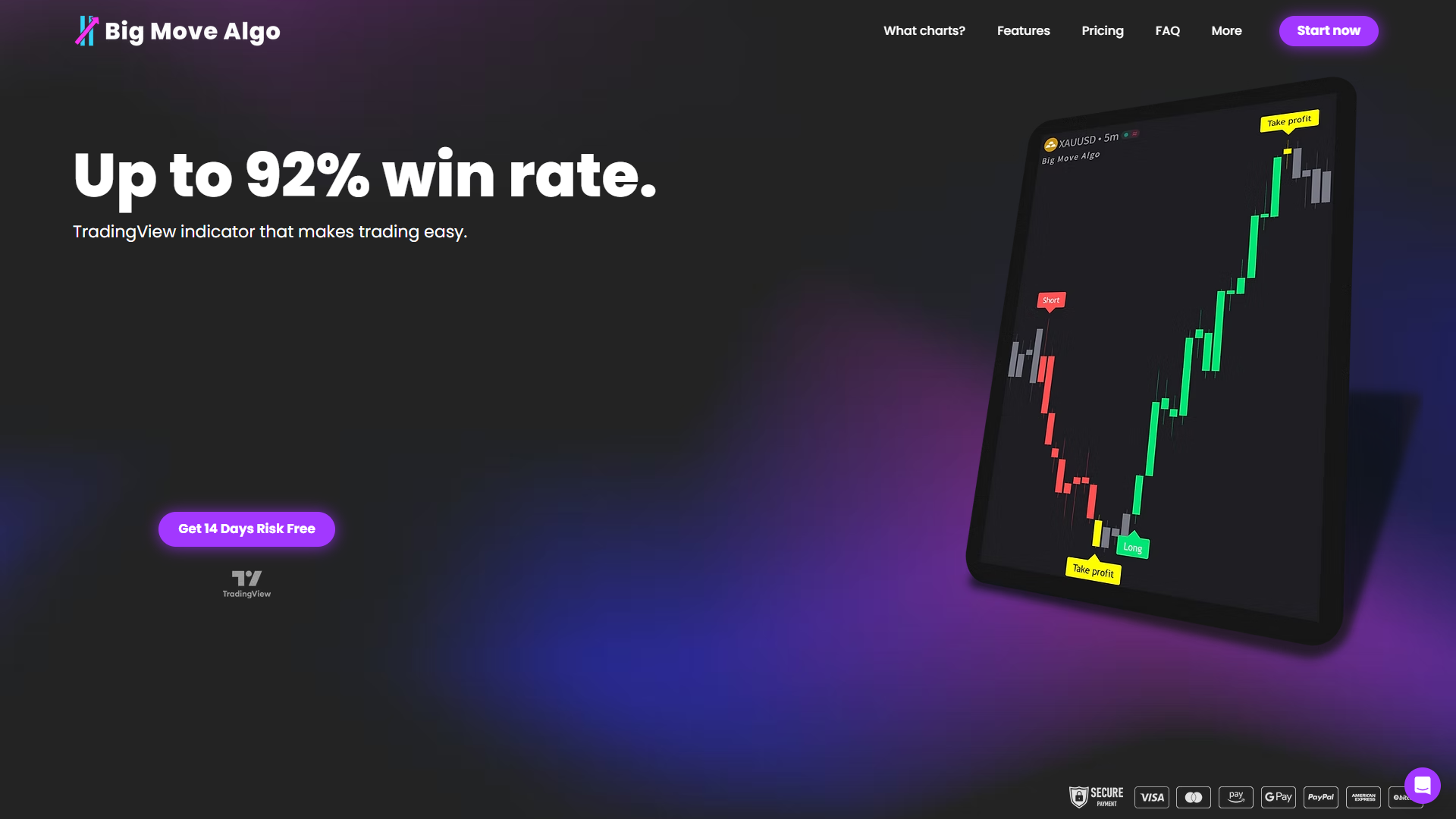
Big Move Algo is a TradingView indicator that delivers Long, Short, and Exit signals in real time across crypto, forex, stocks, and more. The built-in Fake Trend Detector filters out low-quality market conditions, so you are not trading noise. AUTO Mode gets you running in minutes. Manual Mode gives experienced traders additional control. Big Move Algo reports up to 92% win rate on its signals. For traders who want to apply the discipline described in this article without building a system from scratch, that is a direct starting point. The how-to-use guide walks through setup and best practices in plain language.
FAQ
What is signal-based crypto trading?
Signal-based crypto trading uses automated alerts to identify specific entry, exit, and stop-loss points based on quantifiable market triggers. Traders receive these alerts and execute trades according to the pre-defined parameters.
How do trading signals reduce emotional bias?
Signals replace subjective decisions with objective, rule-based entry and exit triggers. Following predefined rules removes fear, greed, and FOMO from the trading process.
Are crypto trading signals guaranteed to be profitable?
No signal service guarantees profits. Risk remains in every trade, and success depends on disciplined application within a broader trading strategy.
Can beginners benefit from crypto trading signals?
Beginners benefit significantly because signals provide structure, defined risk parameters, and exposure to expert market analysis. Following signals with clear reasoning also accelerates pattern recognition and market intuition.
What risk management features should quality signals include?
Quality signals include a specific entry price, a stop-loss level, and a take-profit target. These three parameters define the trade’s risk/reward profile before any capital is committed.
Recommended
Comments