
Generate Passive Income Trading Signals in 2026
- Steven Hartwell

- Jun 29
- 7 min read

Automated trading signals are the most direct method to generate passive income trading signals without performing manual chart analysis. A trading signal is a data-driven alert, typically produced by an algorithm, that tells you when to enter or exit a trade based on predefined market conditions. AI-driven signal automation improves trade selection by 23% on average compared to manual decision-making. That improvement means fewer bad entries and more consistent returns over time. The key to making this work passively is pairing quality signals with preset risk controls so the system runs without requiring your constant attention.
What do you need to generate passive income trading signals?
The right setup determines whether your signal-based income is truly passive or just another form of active trading with extra steps. Three categories of platforms exist: AI-based signal generators, rule-based automation tools, and copy-trading services. Each serves a different trader type and holding period.
Monthly costs for AI trading signal services range from $19 to over $250, depending on service quality and target trader type. Entry-level services suit traders with smaller accounts and lower trade frequency. Professional-grade platforms above $100 per month typically offer higher signal accuracy, multi-market coverage, and built-in risk management features.

Broker compatibility is a non-negotiable requirement. Your signal provider must connect directly to your broker or trading platform so execution happens automatically. Without that link, you are back to manual entry, which defeats the purpose.
Key prerequisites before you start:
A broker account with API access or webhook support for automated execution
A signal provider that matches your preferred markets (crypto, forex, stocks, indices, or commodities)
Predefined risk parameters: maximum position size per trade and a daily loss cap
A conviction score threshold to filter out low-quality signals
A clear understanding of how buy and sell signals are calculated before trusting them with real capital
Traders who select signal providers tailored for multi-day holding periods outperform those using intra-day scalping platforms that require active management. If your goal is passive income, choose a provider built for swing or position trading, not one optimized for five-minute charts.
How to set up automated trading signals for passive income
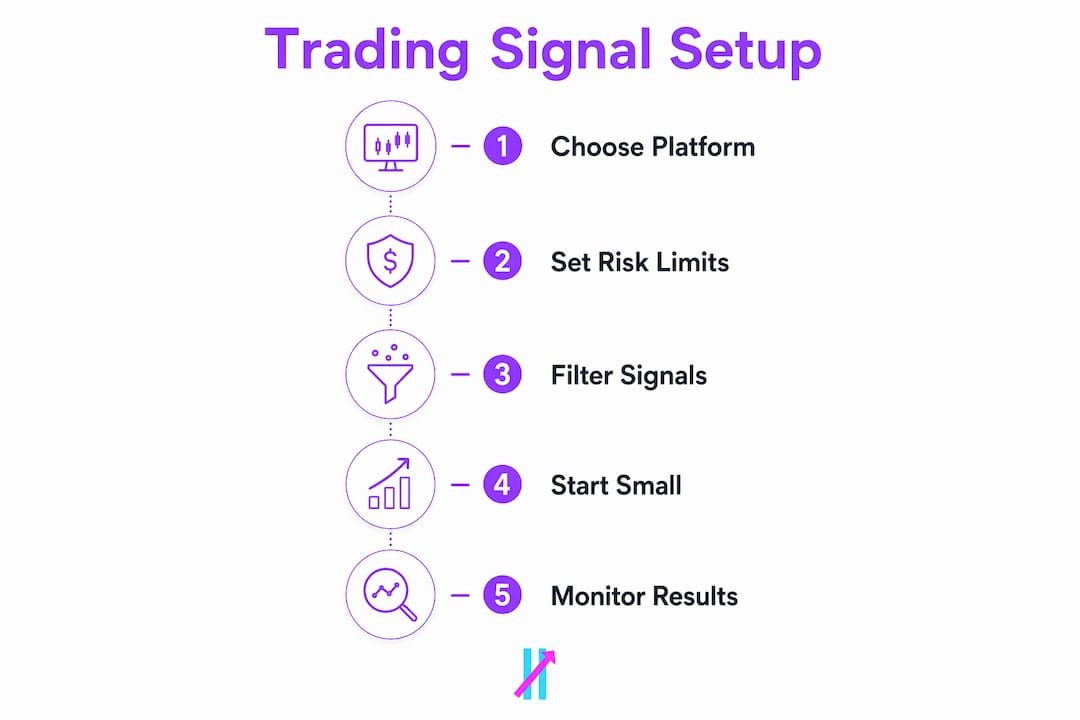
A structured setup process separates traders who earn steady returns from those who lose money on automation. Follow these steps in order.
Choose a signal provider aligned with your holding period. Passive income strategies work best with signals that hold positions for hours or days, not minutes. Review the provider’s average trade duration before subscribing.
Set your risk limits before activating any signal. Predefined risk limits like maximum daily loss and position size caps are essential guardrails ensuring single bad signals cannot severely harm a portfolio. Set your per-trade risk at no more than 1–2% of total capital.
Link your broker to the signal platform. Most platforms use webhooks or direct API connections. Test the connection with a paper trading account before going live with real money.
Define your conviction score threshold. High conviction signal filtering at 70 or above is critical to avoid overtrading in low-volatility conditions and maintain steady returns. Signals below that threshold carry more noise than value.
Set your take-profit and stop-loss levels. Some platforms calculate these automatically. If yours does not, define them manually based on your risk-to-reward ratio before the first trade fires.
Monitor performance weekly, not daily. Premature manual intervention reduces automation benefits. Check your results once a week and adjust parameters only when you see a consistent pattern, not after a single losing trade.
Pro Tip: Start with the lowest available position size for the first two weeks. This lets you verify that your broker connection, signal reception, and risk limits all work correctly before scaling up capital.
Structured signal-based approaches deliver an average of 2–4 qualifying signals per day, though platforms may generate up to 9 depending on market volatility. More signals do not mean more income. Filtering for quality over quantity is what keeps the strategy passive and profitable.
Common pitfalls when earning income from trading signals
The biggest misconception about signal-based passive income is that it requires zero attention after setup. That belief leads to the most costly mistakes traders make.
“Passive income via trading signals demands user-defined rules for capital allocation, stops, and take profits to avoid the myth of fully ‘set and forget’.”
The system still needs your rules to function correctly. Without them, a single bad signal can trigger a position far too large for your account.
Mistakes that kill passive income strategies:
Ignoring automated guardrails. Traders who skip stop-loss settings or daily loss caps expose their entire account to a single bad trade. Automated guardrails such as risk limits protect against this directly.
Overtrading low-conviction signals. Taking every signal regardless of quality inflates trade count without improving returns. Filter aggressively.
Mismatching subscription cost to trade frequency. Trading less than 3–4 times per week may negate passive income benefits when subscription fees are high. Calculate your cost per signal before committing to a premium plan.
Intervening emotionally after losses. Turning off automation after two bad trades is the most common way traders sabotage a working system. Losses are part of any strategy. The guardrails exist precisely for this scenario.
Treating no-signal days as failures. Some market conditions produce zero qualifying signals. That is the system working correctly, not breaking down.
AI trading bots reduce emotional decisions by automating execution and monitoring, helping traders maintain consistent passive income strategies. The emotional benefit is just as real as the technical one.
How to maintain and grow your signal-based income over time
A passive income trading strategy is not a one-time setup. Markets change, and your parameters need to reflect that.
Review your risk parameters every month. If market volatility has increased significantly, tighten your position sizes. If your signal provider has changed its algorithm or signal frequency, reassess whether the subscription still fits your trading style.
Track your cost per signal as a regular metric. Divide your monthly subscription cost by the number of qualifying signals you actually traded. If that number climbs above a threshold that makes the strategy unprofitable at your account size, either scale capital or switch to a lower-cost tier.
Pro Tip: Keep a simple weekly log: number of signals received, number taken, win rate, and net P&L. Three months of data gives you enough to make informed adjustments without reacting to short-term noise.
Scaling capital is the most effective way to grow passive returns without increasing complexity. Once your strategy has proven consistent over 60–90 days, increase position sizes incrementally. Do not double capital overnight. A 20–25% increase per quarter keeps risk manageable while compounding returns.
Adjust for market regime changes. Trending markets produce more high-conviction signals. Range-bound or choppy markets produce fewer. A good signal platform will flag low-quality conditions automatically. Big Move Algo’s built-in Fake Trend Detector, for example, identifies misleading market conditions and withholds signals when the environment does not support reliable entries. That feature alone prevents a large category of avoidable losses.
Balancing automated trades with occasional manual review keeps you informed without pulling you into active trading. The goal is awareness, not intervention. Know what your system is doing and why, but let it run.
Key takeaways
Passive income from trading signals works when you combine quality signal filtering, predefined risk limits, and disciplined non-intervention into a single structured system.
Point | Details |
Signal quality over quantity | Filter signals above a 70+ conviction score to reduce overtrading and improve outcomes. |
Risk limits are non-negotiable | Set per-trade position size and daily loss caps before activating any automated execution. |
Match cost to trade frequency | Trading fewer than 3–4 times per week on a premium subscription erodes net profitability. |
Avoid emotional intervention | Turning off automation after short-term losses is the most common way to break a working strategy. |
Review monthly, not daily | Adjust parameters based on consistent patterns over weeks, not reactions to single trades. |
Why discipline matters more than signal volume
Most traders who fail at signal-based passive income do not fail because they chose the wrong platform. They fail because they treat the system like a slot machine rather than a business.
I have watched traders subscribe to high-quality signal services, receive solid alerts, and still lose money. The reason is almost always the same: they override the system when it does not match their gut feeling. They skip the stop-loss setup because they are confident in a particular trade. They take every signal during a choppy week because they want to “make up” for a slow month. These are active trading behaviors dressed up in passive income clothing.
The traders who actually build consistent income from signals share one trait: they set their rules once, test them carefully, and then leave the system alone. They treat a no-signal day as a win. They calculate cost per signal before upgrading to a more expensive tier. They do not confuse a losing week with a broken strategy.
Signal tools are exactly that: tools. A hammer does not build a house by itself. The discipline you bring to position sizing, risk limits, and non-intervention is what turns a signal into income. The best signal in the world cannot save a trader who sizes positions recklessly or panics at the first drawdown.
Choose a platform built for the way you want to trade, not the one with the most features. Set your rules. Then get out of the way.
— Steven Hartwell
Big Move Algo: signals built for structured passive income
Traders who want clear, structured signals without the complexity of manual analysis use Big Move Algo. The platform delivers Long, Short, and Exit signals in real time across crypto, forex, stocks, indices, and commodities, with a reported up to 92% win rate.
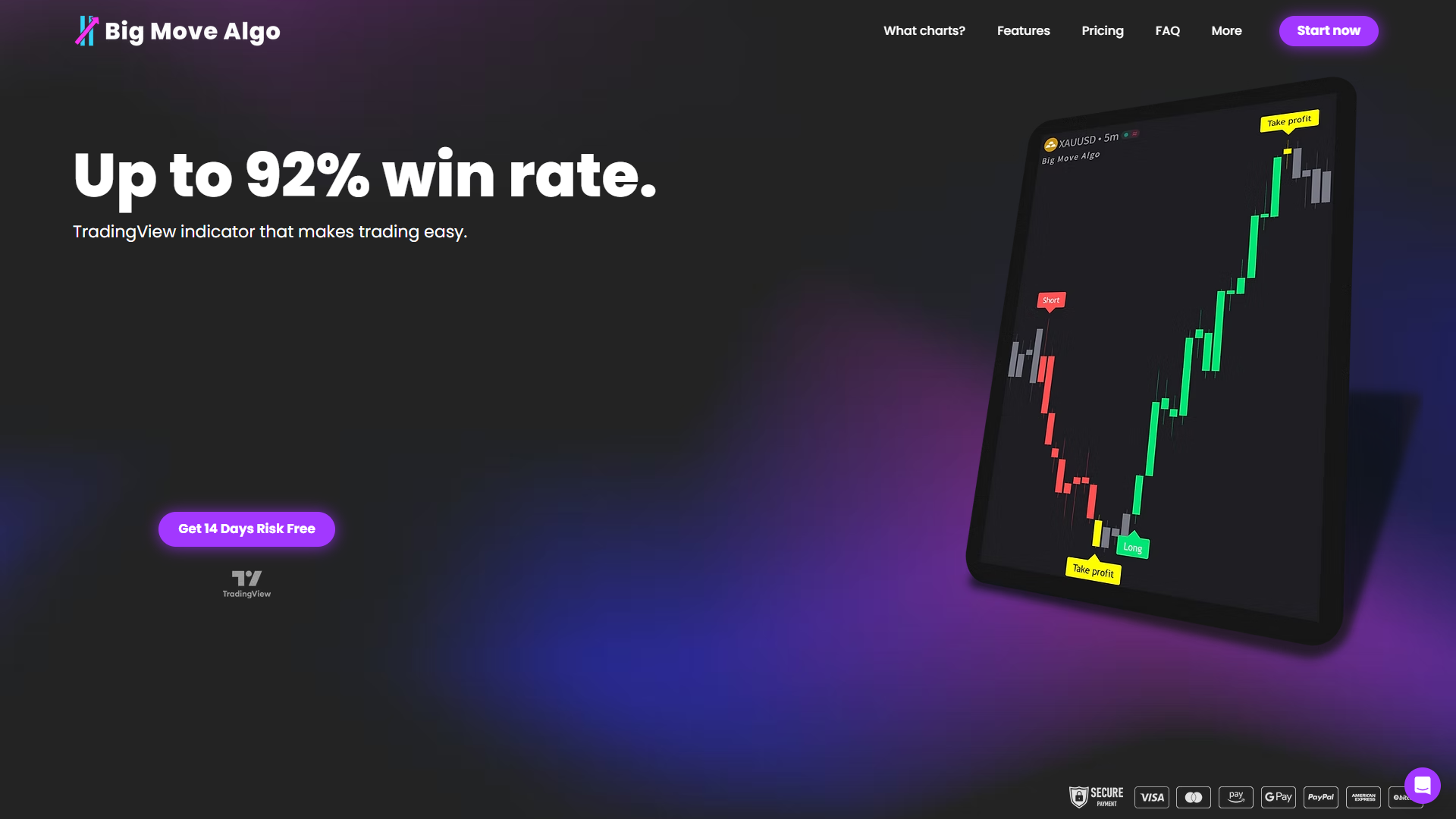
Big Move Algo’s AUTO Mode requires minimal setup, making it one of the fastest ways to get a signal-based system running. The built-in Fake Trend Detector filters out low-quality market conditions automatically, so you receive fewer signals with higher reliability. The step-by-step usage guide walks you through connecting the indicator, setting risk parameters, and reading each signal type from day one.
FAQ
What are trading signals for passive income?
Trading signals for passive income are automated alerts that tell you when to enter or exit a trade based on algorithmic analysis. Paired with preset risk controls, they allow a system to execute trades without requiring manual chart reading.
How many signals should I expect per day?
Structured signal platforms typically deliver 2–4 qualifying signals per day, with some generating up to 9 during high-volatility periods. Filtering by conviction score reduces that number to only the highest-quality setups.
What conviction score should I use to filter signals?
A conviction score of 70 or above is the standard threshold for filtering out low-quality signals. Scores below that level increase overtrading risk without meaningfully improving returns.
How much does a trading signal subscription cost?
Monthly costs range from $19 for entry-level services to over $250 for professional-grade platforms. Calculate your expected cost per signal relative to your trading frequency before choosing a tier.
Can I really earn passive income from trading signals without watching charts?
Yes, but only if you configure automated execution, set risk limits, and avoid overriding the system manually. Passive income from signals requires upfront setup discipline, not zero involvement.
Recommended
Comments